 how-to
How to Assess Supplement Research: A Step-by-Step Guide
Table of Contents
- Why Assessing Supplement Research Matters
- How to Read a Clinical Trial and Understand Study Design
- Randomized Controlled Trials for Supplements: What They Tell You
- Evaluating Supplement Study Dosage and Real-World Application
- Building Your Supplement Research Checklist
- Assessing Supplement Safety and Risk for Your Population
- Common Research Limitations and How to Interpret Them
- Putting It All Together: A Practical Decision Framework
- Frequently Asked Questions
Last Updated: October 8, 2026
Why Assessing Supplement Research Matters
Understanding how to assess supplement research is one of the most valuable skills you can develop as a health consumer.
Here's the problem: the supplement industry is minimally regulated compared to pharmaceuticals. A company can make bold claims about their product without the same rigorous testing that prescription drugs require. That doesn't mean supplements are unsafe or ineffective.
At N&O LLC, we believe transparency starts with education. Our formulations are built on research, but we recognize that your job as a consumer is to verify that claim yourself.
This guide walks you through the exact process we use to evaluate supplement research. By the end, you'll have a practical checklist you can apply to any supplement, whether it's from N&O LLC or any other brand.
How to Read a Clinical Trial and Understand Study Design
Study Design Fundamentals
A clinical trial is a research study conducted on human participants to test whether a treatment works. Not all trials are equal. The design of the study determines how much weight you should give to its findings.
Randomized controlled trials (RCTs) are the gold standard. Participants are randomly assigned to either receive the supplement or a placebo.
Observational studies track people who already use a supplement and compare them to those who don't. These are faster and cheaper to run, but they can't prove cause and effect.
In vitro studies test a supplement in a lab dish. Animal studies test it in animals. Both are early-stage research.
Here's what matters: a supplement backed by one large, well-designed RCT in humans is more credible than ten animal studies or observational studies combined.
Identifying Bias and Conflicts of Interest
Bias can slip into research in many ways. Funding bias is common: a supplement company funds a study testing their own product. That doesn't automatically mean the results are wrong, but it's a red flag worth noting.
Selection bias happens when the people in the study aren't representative of the general population. A study of marathon runners taking an endurance supplement tells you nothing about office workers.
Publication bias is subtle but important. Studies showing positive results get published. Studies showing no effect often stay in a drawer. If you only read published studies, you're seeing a skewed picture of the evidence.
Check the study's conflict of interest statement. Authors should disclose if they work for the supplement company, own stock in it, or received funding from it.
Randomized Controlled Trials for Supplements: What They Tell You
Randomized controlled trials for supplements are the strongest evidence available for evaluating efficacy.
Here's what makes an RCT credible:
Random assignment. Participants are assigned to groups by chance, not by choice. This prevents healthy people from self-selecting into the supplement group and sick people into the placebo group.
Blinding. Participants don't know if they're taking the supplement or placebo. The researchers analyzing the data don't know either. This prevents expectation effects from skewing results.
Adequate sample size. A study with 30 people is less reliable than one with 300. Larger studies are harder to fool by random chance alone.
Clear primary outcome. Before the study starts, researchers specify what they're measuring. Did they measure pain reduction, blood pressure, cognitive function?
Appropriate duration. Some effects take weeks or months to appear. A two-week study of a supplement meant for long-term use won't tell you much.
When you find an RCT supporting a supplement claim, ask yourself: Does this study match the real-world situation? Were participants similar to me?
Evaluating Supplement Study Dosage and Real-World Application
One critical mistake people make is assuming that if a supplement works in a study, the product they buy will work the same way.
A clinical study might test 500 mg of an herb extract daily. The supplement bottle on the shelf might contain only 250 mg.
Dose-response relationships matter. If a study used 1,000 mg and saw results, that doesn't guarantee 500 mg will work. Some supplements show a dose-response curve, more is better, up to a point.
Check the product label against the study protocol. Look for:
- The exact dose tested (in milligrams or other units)
- The form of the ingredient (powder, extract, standardized extract)
- The duration of the study (weeks, months, years)
- The population studied (age, health status, gender)
If your supplement uses a lower dose than what was studied, the effect might be weaker or absent. If it uses a much higher dose, you're in untested territory.
This is where transparency matters. At N&O LLC, we list exact doses on our labels so you can match them to research. Many brands don't. That opacity is worth noticing.
Building Your Supplement Research Checklist
Ingredient and Product Composition Review
Before diving into clinical research, start with the basics: what's actually in the bottle?
Read the supplement label carefully. Look for:
- Active ingredients listed with their amounts in milligrams or other units
- Standardization information (e.g., "standardized to 95% curcuminoids")
- Form of the ingredient (whole herb, extract, concentrate, isolate)
- Other ingredients (fillers, binders, additives)
- Allergen warnings
Standardization is important. A standardized extract contains a guaranteed level of the active compound. A whole herb powder can vary wildly in potency depending on growing conditions, harvest time, and processing.
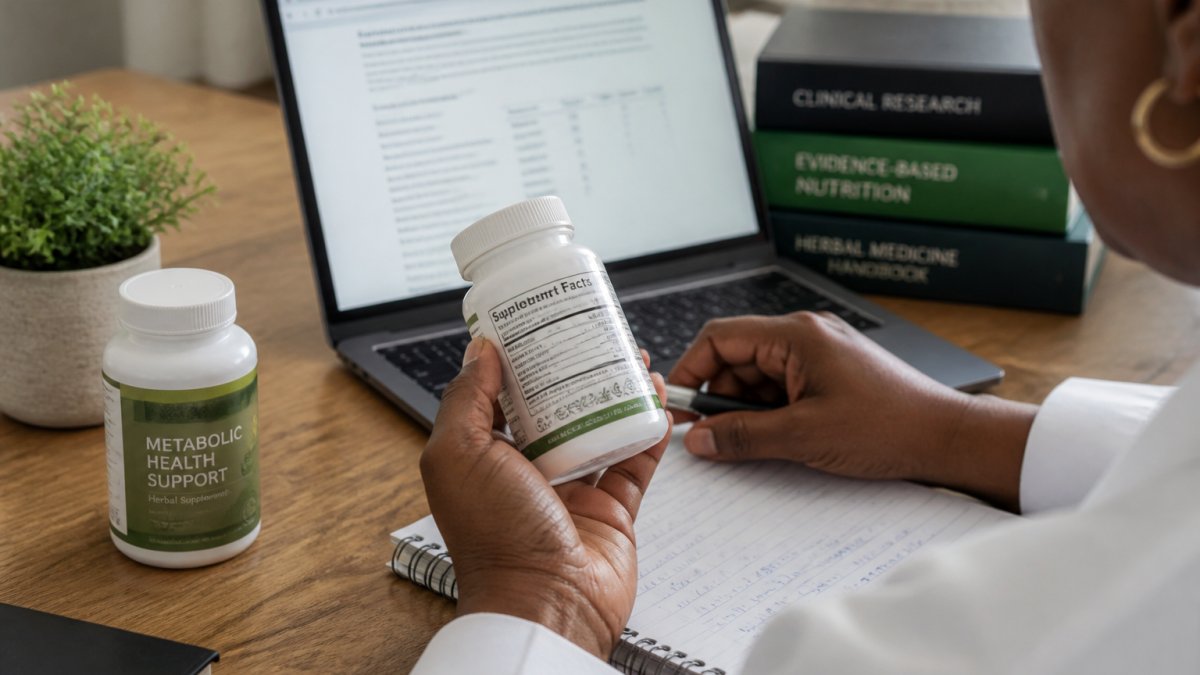
Ask yourself: Can I trace each ingredient to a credible source? Does the label match the doses used in the research I found? Are there ingredients listed that seem unnecessary or are there to bulk up the product cheaply?
Quality, Purity, and Third-Party Testing Verification
A supplement might contain exactly what the label claims, or it might contain contaminants, heavy metals, or bacterial pathogens. The only way to know is through testing.
Third-party testing means an independent lab (not the supplement company) tests the product. Look for certifications from organizations like NSF International, USP (United States Pharmacopeia), or ConsumerLab.
These labs test for:
- Identity: Does the product contain what the label says?
- Purity: Are there contaminants like lead, cadmium, or pesticides?
- Potency: Does it contain the claimed amount of active ingredient?
- Microbial contamination: Are there harmful bacteria or molds?
A reputable brand will publish third-party test results. If a company refuses to share them or claims testing is "proprietary," that's a warning sign.
Check the company's website or ask them directly for certificates of analysis. The document should be recent (within the last year or two) and specific to the product batch you're considering.
Assessing Supplement Safety and Risk for Your Population
Safety assessment means two things: Is the supplement itself safe, and is it safe for YOU specifically?
General safety comes from adverse event reports, toxicity studies, and long-term use data. A supplement with decades of traditional use and no serious adverse events reported is generally safer than a novel ingredient with minimal history.
Population-specific safety depends on your age, health status, medications, and conditions. A supplement safe for a healthy 30-year-old might be risky for someone with liver disease or taking blood thinners.
Key safety considerations:
- Drug interactions: Does the supplement interact with your medications? Ginkgo can increase bleeding risk if you take aspirin. St. John's Wort reduces effectiveness of many psychiatric medications.
- Pregnancy and nursing: Many supplements haven't been tested in pregnant or breastfeeding women. If you're in this category, be cautious.
- Chronic conditions: Liver disease, kidney disease, heart conditions, and autoimmune disorders all change how your body processes supplements.
- Allergies and sensitivities: Check ingredient lists for things you're allergic to, including binders and fillers.
If you have a complex medical history or take multiple medications, talk to your healthcare provider before starting a new supplement. They know your full picture.
Common Research Limitations and How to Interpret Them
Even well-designed studies have limits. Understanding them helps you avoid over-interpreting results.
Small sample size. A study with 50 participants is preliminary. Results might not hold up in a larger population.
Short duration. A 12-week study tells you about short-term effects. Long-term safety and efficacy remain unknown.
Specific population. A study conducted in young, healthy men might not apply to older women or people with chronic illness.
Surrogate outcomes. Sometimes researchers measure a marker (like blood sugar) instead of the actual outcome you care about (like diabetes prevention).
Lack of replication. A single study, even a good one, isn't conclusive. When multiple independent teams replicate findings, confidence grows.
The key is proportional interpretation. One small study showing benefit is interesting but not proof.
Putting It All Together: A Practical Decision Framework
Now you have the tools. Here's how to use them:
Step 1: Find the research. Search PubMed or Google Scholar for the supplement and the health claim. Look for human studies, especially RCTs.
Step 2: Assess study quality. Use the checklist below to evaluate each study's design, sample size, duration, and potential bias.
Step 3: Check dosage alignment. Compare the dose tested in research to the dose in the product you're considering.
Step 4: Look for consistency. Do multiple studies show similar results?
Step 5: Evaluate safety. Search for adverse events, drug interactions, and contraindications relevant to your situation.
Step 6: Verify product quality. Confirm that the supplement carries third-party testing and that the company publishes results.
Step 7: Make an informed decision. Based on evidence strength, safety profile, and your personal situation, decide whether the supplement is worth trying.
| Research Assessment Element | What to Look For | Red Flag |
|---|---|---|
| Study Design | Randomized, controlled, blinded | Observational only, no control group |
| Sample Size | 100+ participants | Fewer than 30 participants |
| Duration | Matches intended use timeframe | Too short for claimed benefit |
| Dose Tested | Matches product dose | Significantly different from product |
| Conflict of Interest | Independent funding or disclosed conflicts | Company-funded with no disclosure |
| Replication | Multiple studies show similar results | Single study with no replication |
| Third-Party Testing | NSF, USP, or ConsumerLab certified | No independent testing available |
Remember: strong evidence for a supplement is rare. Most supplements have "promising" or "preliminary" evidence.
At N&O LLC, we formulate based on research that exists today, knowing it may evolve.
Taking control of your supplement choices starts with understanding the research behind them. When you know how to read a clinical trial, spot bias, and verify dosage claims, you can confidently evaluate any supplement, whether you're managing metabolic health, supporting cognitive function, or addressing nerve wellness.
Frequently Asked Questions
How do you know if supplement research is reliable?
Reliable supplement research comes from peer-reviewed journals, uses randomized controlled trial design, includes a clear conflict-of-interest statement, and reports both positive and negative findings. Check whether the study was funded by the supplement manufacturer (potential bias) or by independent sources. Look for adequate sample size (typically 50+ participants), clear inclusion/exclusion criteria, and a control group. Studies published in established medical journals and replicated by independent teams are stronger than single, industry-funded studies.
What makes a supplement study high quality?
High-quality supplement studies have rigorous design: randomization of participants, blinding (double-blind is strongest), adequate duration (at least 4-12 weeks for most interventions), clearly defined primary outcomes, and transparent reporting of adverse effects. The study should measure clinically meaningful endpoints, not just laboratory markers, and report both efficacy and safety data. Look for sample sizes calculated in advance, appropriate statistical analysis, and registration on ClinicalTrials.gov before the study began. Peer review and publication in reputable journals add credibility.
How can you tell whether a supplement study applies to you?
Check the study's inclusion and exclusion criteria against your own health profile. If you have MS, diabetes, or take medications, look for studies that enrolled similar populations. Note the participant demographics: age, gender, baseline health status, and any comorbidities. A study in healthy 25-year-olds may not predict outcomes for a 55-year-old managing chronic conditions. Review whether participants had documented deficiencies or conditions matching yours. If the study enrolled only people with severe symptoms and you have mild symptoms, results may not translate directly.
How do you evaluate the dosage used in a supplement study and compare it to a product?
Extract the exact dose, form (powder, capsule, extract), and frequency from the study methods section. Convert units if needed (e.g., mg to grams). Compare this directly to your supplement's label: does it deliver the same dose in the same form? A study using 500 mg of a standardized extract may not apply to a product with 200 mg of whole herb powder. Check whether the study used a concentrated extract versus dried plant material, bioavailability differs. If your product's dose is lower than the studied dose, efficacy may be reduced. If it's higher, safety data may not cover that dose.