 comparison
Mental Clarity Supplements for Beginners: 2026 Review
Table of Contents
- Mental Clarity Supplements for Beginners: What You're Actually Buying
- Quick Comparison: Five Beginner-Friendly Options
- 1. N&O LLC: Transparent Dosing Backed by Clinical Experience
- 2. Mind Lab Pro v4: The All-in-One Stack
- 3. Focus Factor: The Budget Entry Point
- 4. Nordic Naturals Ultimate Omega: Foundational Omega-3 Support
- 5. New Chapter Turmeric Force: Herbal Anti-Inflammatory Route
- Brain Supplements That Work: What the Evidence Actually Shows
- Frequently Asked Questions
Last Updated: October 19, 2026
Mental Clarity Supplements for Beginners: What You're Actually Buying
Most mental clarity supplements for beginners are built on marketing, not evidence. The labels promise sharper focus and better memory, but the clinical picture is far more modest, especially for people who already get enough nutrients from food. This review cuts through the noise. We rank five beginner-friendly options by ingredient transparency, dosing, and realistic expectations.
Mental clarity supplements are products combining vitamins, minerals, fatty acids, or botanicals intended to support cognition, focus, and concentration. The key word is "support." They are not treatments for cognitive decline, dementia, or any age-related condition, and no supplement replaces sleep, aerobic exercise, or a doctor's care.
Quick Comparison: Five Beginner-Friendly Options
Most beginner reviews compare products by marketing category ("all-in-one," "budget," "herbal") and stop there. That's not enough to make a first purchase.
| Product | Best For | Dose Disclosure | Third-Party Testing | Approx. Bottle Price | Servings / Bottle | Approx. Cost Per Day | Evidence Tier |
|---|---|---|---|---|---|---|---|
| N&O LLC | Transparent, nurse-formulated protocols | Full ingredient and dose disclosure | Verify current COA on site | Varies by protocol | Varies by protocol | Varies, check site | Tier 1-2 (protocol-dependent) |
| Mind Lab Pro v4 | All-in-one convenience | Full doses on label | Yes (brand states third-party testing) | ~$69 | 30 capsules (1/day) | ~$2.30 | Tier 2 (multi-ingredient stack) |
| Focus Factor | Budget entry point | Proprietary blend, doses hidden | Not prominently disclosed | ~$24.99 | 30-60 servings (varies) | ~$0.42-$0.83 | Tier 2-3 (undisclosed doses) |
| Nordic Naturals Ultimate Omega | Foundational omega-3 support | EPA/DHA disclosed | Yes (third-party tested for purity) | ~$30 | 30-60 softgels (varies) | ~$0.50-$1.00 | Tier 1 |
| New Chapter Turmeric Force | Herbal anti-inflammatory route | Standardized extract disclosed | Yes (brand states testing) | ~$35 | 30-60 capsules (varies) | ~$0.58-$1.17 | Tier 3 (subtle, long-term) |
Cost-per-day is approximate and assumes the label's standard serving; check the actual serving size on the bottle you buy, because some products require two capsules per serving.

How to read this table like a beginner
1. Dose disclosure is the first filter. A proprietary blend that hides individual ingredient amounts makes it impossible to compare against the doses used in clinical trials.
2. Third-party testing is the second filter. Look for a certificate of analysis (COA) or a recognizable testing seal.
3. Cost per day beats cost per bottle. A $24.99 bottle that lasts 30 days is ~$0.83/day; a $69 bottle that lasts 30 days is ~$2.30/day.
**4.
**5.
1. N&O LLC: Transparent Dosing Backed by Clinical Experience
N&O LLC's formulations come from a doctoral-prepared nurse, Dr. Paulette Y. Jones, DNP-L, RN, with nearly thirty years of clinical experience. Every label lists full ingredients and doses, so you know exactly what you're taking. The protocols are phased for gentle, effective health building rather than an all-at-once hit. Cognitive and longevity support sits alongside nerve and cellular health recovery, which suits adults managing metabolic or nerve-related concerns. Pricing depends on the protocol you choose, so check the website for current details.
2. Mind Lab Pro v4: The All-in-One Stack
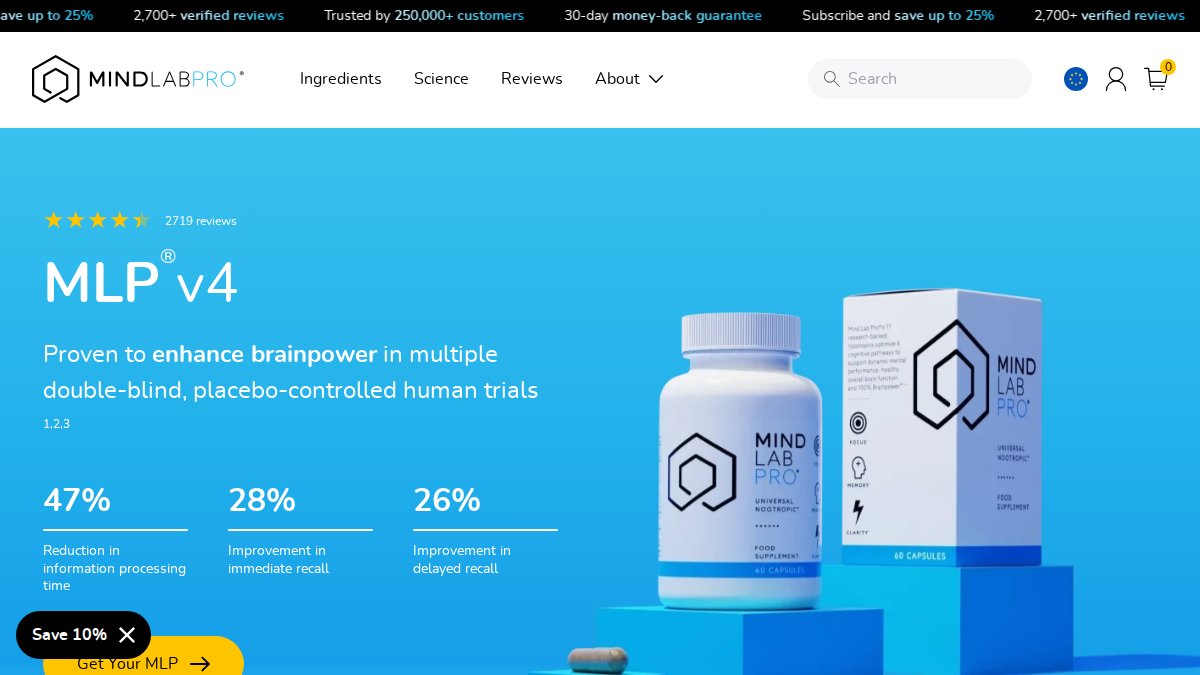
If you want one bottle instead of five, Mind Lab Pro v4 bundles 11 research-backed nootropic ingredients, including Lion's Mane mushroom, into a single capsule. It starts around $69 per bottle and is highly rated for focus and mental clarity. The tradeoff is cost, and beginners sometimes find a multi-ingredient stack harder to evaluate because you can't isolate what's working. Best for people who want convenience and don't mind paying for it.
3. Focus Factor: The Budget Entry Point
Focus Factor is the accessible starting line at roughly $24.99 per bottle. It blends vitamins like B12 and D, minerals, and botanicals for daily memory and concentration support, and it's easy to find at major retailers. The catch most reviews skip: it uses a proprietary blend, so individual doses aren't disclosed, and results can take up to four weeks. Fine for testing the waters on a budget, weaker on transparency.

4. Nordic Naturals Ultimate Omega: Foundational Omega-3 Support
Omega-3 fatty acids are the most defensible beginner purchase here. Nordic Naturals Ultimate Omega delivers a high concentration of EPA and DHA, is third-party tested for purity, and sources from wild-caught fish, starting around $30. Health professionals widely recognize it for general cognitive support. Set expectations: this is foundational nutrition, not a stimulant-style boost, and it won't sharpen focus overnight.
5. New Chapter Turmeric Force: Herbal Anti-Inflammatory Route
For beginners drawn to herbal supplements, New Chapter Turmeric Force uses full-spectrum turmeric with ginger and black pepper for absorption, around $35. It's non-GMO and vegetarian, and it supports brain health through antioxidant and anti-inflammatory activity. The effects on mental clarity are subtle and long-term rather than acute. A reasonable choice if systemic health is your goal, a poor one if you want fast results.

Brain Supplements That Work: What the Evidence Actually Shows
The honest answer most labels avoid: the strongest evidence supports correcting a deficiency, not boosting an already-normal nutrient level. That single distinction reframes the entire beginner decision. Below is how the major ingredient categories actually stack up, what mechanisms are plausible, and where the research is thin, so you can rank products by evidence instead of by marketing.
The evidence tiers, ranked for beginners
Tier 1, Defensible for most beginners (correct a gap, support foundational health):
- Omega-3 fatty acids (EPA/DHA). DHA is a structural component of neuronal membranes, and EPA feeds into anti-inflammatory signaling. The strongest cognitive findings are in people with low intake or low blood levels; in well-nourished adults, effects on focus are modest. A common practitioner target is roughly 1,000-2,000 mg combined EPA+DHA per day from food and/or supplement, though individual needs vary. This is why a third-party-tested fish oil is the most defensible first purchase.
- Vitamin D. Low vitamin D is associated with worse cognitive performance in observational work, and correction in deficient people is reasonable. If your blood level is already sufficient, extra D does not sharpen focus. Ask your clinician to check 25-hydroxyvitamin D before supplementing high doses.
- B vitamins (B12, B6, folate). B12 deficiency causes real cognitive symptoms, and older adults, vegans, and people on metformin or long-term acid suppressants are at higher risk. For people with normal levels, B-vitamin stacks have not reliably improved cognition in trials.
Tier 2, Mixed or population-specific evidence:
- Ginkgo biloba. Trials in healthy adults have been inconsistent; some show small effects on memory, others show none. Standardized extracts (commonly 24% flavone glycosides / 6% terpenelactones) are what most studies used, so an unstandardized powder is a poor test of the ingredient. Ginkgo also has meaningful interaction concerns with anticoagulants and antiplatelets.
- Huperzine A. A cholinesterase inhibitor mechanism is plausible, which is exactly why it deserves caution: it can amplify side effects of prescription cholinesterase inhibitors and interact with other medications. Evidence in healthy beginners is limited.
- Lion's Mane mushroom. Early human trials are small and short; the mechanism (nerve growth factor stimulation) is largely preclinical. Promising, not proven.
- Citicoline and other phospholipids. Some small trials suggest attention benefits, but doses and formulations vary widely, making label reading essential.
Tier 3, Limited or inconclusive for healthy adults:
- Carnitine (acetyl-L-carnitine). Evidence is limited and inconsistent for healthy cognition; effects are more often studied in specific clinical populations.
- Phosphatidylserine. Small studies, mixed results, and often underdosed in commercial products relative to trial doses.
- Turmeric/curcumin. Anti-inflammatory and antioxidant mechanisms are plausible, but bioavailability is poor without a delivery enhancement (piperine, phospholipid, or micellar formulations), and cognitive outcomes in healthy adults are subtle and long-term at best.
The mechanism test: how to read a claim
When a label claims "supports focus," ask which mechanism the ingredient plausibly engages:
- Membrane/structure support (DHA), slow-building, foundational.
- Neurotransmitter precursor or modulator (B vitamins, huperzine A), can be meaningful if you're deficient or if the mechanism is real, but carries interaction risk.
- Anti-inflammatory/antioxidant (turmeric, omega-3 EPA), long-horizon, not acute.
- Adaptogen/stimulant-adjacent (some botanicals), effects may be felt quickly but are the least studied for durable cognitive benefit.
If a product's marketing promises an acute boost but its ingredients are all Tier 1 structural nutrients, the claim and the mechanism don't match. That mismatch is a red flag.
The beginner decision tree
Before buying any supplement, walk this order:
- Are you sleeping 7-9 hours? If not, fix sleep first, no capsule compensates for chronic sleep debt.
- Are you getting aerobic exercise and a balanced diet? These have stronger cognitive evidence than any over-the-counter supplement.
- Do you have symptoms that warrant medical evaluation (persistent brain fog, memory change, fatigue, mood change)? See a clinician before self-treating. Brain fog can signal thyroid disease, anemia, sleep apnea, depression, or medication side effects.
- Are you in a higher-risk group for deficiency (older adult, vegan, restricted diet, metformin or acid-suppressant use, low sun exposure)? Ask for labs before supplementing.
- Only then consider a single-ingredient, third-party-tested product to test one variable at a time, rather than an 11-ingredient stack you can't evaluate.
Frequently Asked Questions
What is the best supplement to take for mental clarity?
There is no single best option because the right pick depends on your goal and current nutrient levels. For foundational support, omega-3 fatty acids from a third-party tested fish oil are the most consistent starting point. For a multi-ingredient approach, a stack that lists every dose on the label, like Mind Lab Pro v4, lets you verify what you are taking. N&O LLC's protocols also offer full transparency of ingredients and doses on labels. Beginners should start with one product at a time, run it for eight to twelve weeks, and track sleep, focus, and energy before adding anything else.
Do any of the brain supplements really work?
Some do, but the effects are narrower than marketing suggests. Research on omega-3 fatty acids, ginkgo biloba, and certain B vitamins shows mixed results, with the clearest benefits appearing in people who were low on those nutrients to begin with. If your diet already covers your needs, adding more rarely sharpens memory. Supplements for focus and concentration are best treated as one input alongside sleep, aerobic exercise, and screen breaks, not as a replacement for them.
Are brain supplements safe for beginners?
Most single-ingredient products are well tolerated at label doses, but brain supplement safety and side effects deserve real attention. Herbal ingredients such as ginkgo can interact with blood thinners, and high-dose vitamin E carries risk for some people. Check every ingredient against your current prescriptions with a pharmacist before starting, buy from brands that publish third-party testing, and introduce one product at a time so you can tell what caused any reaction.
How long does it take for a mental clarity supplement to work?
Expect four to twelve weeks for most ingredients, not days. Focus Factor's own guidance notes results may take up to four weeks, and omega-3 levels build gradually in tissue. Herbal options like turmeric are subtler and longer-term. Set a review date before you start, note your baseline sleep and concentration, and decide at the twelve-week mark whether the difference justifies the cost. Anything promising same-day clarity is usually riding on caffeine or a stimulant.
Can supplements interact with prescription medications?
Yes, and this is the most common beginner mistake. Ginkgo biloba, turmeric, and high-dose fish oil can all affect clotting, which matters if you take anticoagulants or have surgery scheduled. St. John's Wort, sometimes found in mood-focused blends, changes how the body processes several drugs. Bring your full supplement list to your prescriber or pharmacist, and do not stop or adjust a prescription to accommodate a supplement on your own.
The hardest part of buying mental clarity supplements is separating real formulation from marketing noise. At N&O LLC, we built our line around full label transparency, research-based herbal protocols, and phased plans shaped by nearly thirty years of clinical nursing experience. If you want a supplement you can actually understand, explore our cognitive and longevity support line and see exactly what goes into each formula.