 listicle
Professional Grade Herbal Supplement Brands: 2026 Guide
Table of Contents
- What Makes an Herbal Supplement Professional Grade
- Quick Comparison: Top Professional Grade Herbal Supplement Brands
- How to Choose Herbal Supplements That Meet Professional Standards
- Understanding Herbal Supplement Third-Party Testing and Verification
- Reading Herbal Supplement Labels and Ingredients for Quality
- Best Herbal Supplement Brands for Clinical-Grade Support
- N&O LLC: Research-Based Formulations by a Clinical Expert
- Pure Encapsulations: Hypoallergenic Professional Standards
- Thorne: Science-Driven with NSF and Clinical Partnerships
- Metagenics: Lifestyle Medicine and Nutrigenomics Focus
- Himalaya Wellness: Clinical Research Meets Affordability
- Organic India: Certified Organic Adaptogens
- Garden of Life: Whole-Food Sourced Formulations
- Safety, Interactions, and When to Consult a Healthcare Provider
- Frequently Asked Questions
Last Updated: October 8, 2026
What Makes an Herbal Supplement Professional Grade
A professional grade herbal supplement brand meets concrete criteria: research-based formulations, manufacturing protocols exceeding basic regulatory requirements, third-party testing for identity and purity, labels disclosing exact doses and extract types rather than vague "proprietary blends," and transparent sourcing.
At N&O LLC, Dr. Paulette Y. Jones, a doctoral-prepared nurse with nearly thirty years of clinical experience, formulates every product with the same rigor she applied in patient care, producing research-based herbal supplements for metabolic health, cognitive function, and nerve-related wellness.
The gap matters most with serious health concerns. A retail multivitamin might contain ginseng; a professional grade adaptogen formula contains a specific ginseng extract at a clinically studied dose, from a known cultivar, tested for contaminants, a difference that compounds when managing multiple conditions or prescription medications.
Quick Comparison: Top Professional Grade Herbal Supplement Brands
| Brand | Best For | Key Differentiator | Practitioner Access |
|---|---|---|---|
| N&O LLC | Metabolic, cognitive, and nerve health | DNP-formulated, research-based protocols | Direct to consumer |
| Pure Encapsulations | Sensitive systems, allergen avoidance | Hypoallergenic, third-party tested | Practitioner and retail |
| Thorne | Athletes, clinical partnerships | NSF Certified, Mayo Clinic research | Practitioner and retail |
| Metagenics | Functional medicine patients | Nutrigenomics focus, condition-specific | Primarily practitioner |
| Himalaya Wellness | Budget-conscious, clinical backing | Affordable professional quality | Retail and practitioner |
| Organic India | Ethical sourcing, adaptogenic support | Certified organic, fair-trade | Retail and practitioner |
| Garden of Life | Whole-food sourcing preference | USDA Organic, Non-GMO Project Verified | Retail and practitioner |
How to Choose Herbal Supplements That Meet Professional Standards
Start by examining whether the brand discloses extract type and standardization. A professional formula specifies "Ginkgo biloba 50:1 extract standardized to 24% ginkgo flavone glycosides" rather than just "Ginkgo biloba."
Verify third-party testing by asking directly: "Do you conduct third-party testing for identity and contaminants?" Legitimate brands provide certificates of analysis (COAs) on request or link them on product pages.
Check sourcing transparency: where botanicals come from and whether they're wildcrafted, organically cultivated, or conventionally grown. Professional brands document this, including seed-to-shelf traceability.
Look at the formulation. Does it make clinical sense? A nerve support formula should contain botanicals with research backing for that specific use, not a general "wellness blend."
Finally, consider whether the brand works with practitioners. The key is whether the company can articulate why they chose each ingredient and what clinical evidence supports its use.
Practitioner-Channel Brands vs. Retail Availability
However, practitioner access alone doesn't guarantee quality. The real distinction is whether formulations are based on published research and whether the brand is willing to be held accountable.
Direct-to-consumer professional brands like N&O LLC must build trust through transparent labeling and clear communication, a model that works when the company has clinical credibility, like a DNP-formulated line, and prioritizes education over marketing hype.
Evidence Grading for Specific Herbs and Claims
Not all herbal research is equal. Professional brands distinguish between well-studied botanicals and those with limited evidence. Ginkgo biloba has decades of clinical research, Bacopa monnieri has multiple randomized controlled trials, and ashwagandha has strong evidence for stress and sleep support.
Other botanicals have traditional use but limited clinical data. Professional brands are honest about this distinction, acknowledging when evidence is preliminary.
When evaluating claims, look for specificity. "Supports cognitive function" is vague; "supports memory and mental clarity in adults over 50" is specific and testable. Professional brands tie claims to reviewed research and specify the population and outcome the formula addresses.
Understanding Herbal Supplement Third-Party Testing and Verification
Third-party testing is the most reliable way to verify what's in a supplement bottle. The FDA doesn't pre-approve supplements the way it does drugs, so the industry relies on company integrity and independent verification.
Professional brands test at multiple stages: raw material testing verifies botanical identity and freedom from heavy metals, pesticides, and microbial contaminants; in-process testing monitors manufacturing quality; finished product testing confirms the supplement matches the label and is safe.
The testing organizations matter. NSF International, USP, and ConsumerLab are reputable, and NSF Certified for Sport or USP Verified marks indicate rigorous testing. The key is whether testing is independent and results are available to consumers.
Ask brands directly about testing protocols. A professional grade company will answer straightforwardly.
USP's supplement verification standards set rigorous requirements for identity, strength, and purity. Brands meeting USP standards have demonstrated their supplements contain labeled ingredients at stated potency and are free from harmful contaminants.
Certificate of Analysis and Batch Testing
A certificate of analysis (COA) is proof that testing happened, showing what was tested, the results, and when.
When reading a COA, look for the botanical identified by common and scientific name, the batch or lot number, and testing for identity, potency, and contaminants (heavy metals, pesticides, microbial organisms).
Batch testing matters because botanical material varies, two batches from different suppliers or harvest seasons might have different potency. Professional brands test each batch to ensure consistency.
Reading Herbal Supplement Labels and Ingredients for Quality
The label tells you whether a supplement is professional grade. A professional formula lists every ingredient with its amount in milligrams or grams, specific botanical names (common and scientific), and extract ratios or standardization levels.
A label saying "Proprietary Blend" without disclosing amounts is a red flag, you don't know how much of each ingredient you're getting. Professional brands disclose everything.
Look at the serving size. Professional formulations are potent enough to deliver results at reasonable serving sizes; if a formula requires 10 capsules daily, it's either poorly formulated or designed to make the bottle last longer so it looks cheaper.
Check for third-party testing marks. NSF, USP, and ConsumerLab logos indicate verified quality, though absence of a logo doesn't automatically mean poor quality.
Read the "Other Ingredients" section. Professional brands minimize fillers, binders, and additives, while retail supplements often contain unnecessary fillers, colorants, and flow agents.
Standardized Extracts vs. Whole Plant Material
Standardized extracts contain a guaranteed minimum amount of active constituents, ginkgo biloba extract standardized to 24% ginkgo flavone glycosides means every dose contains at least that amount. This consistency matters clinically because research studies use standardized extracts.
Whole plant material (dried herb powder) is less consistent, potency varies with growing conditions, harvest timing, and storage. Some practitioners prefer it for the full spectrum of plant compounds, but this requires accepting variability in results.
Professional brands make deliberate choices, standardized extracts where research demands consistency, whole plant material where traditional preparation is more effective, and document that choice.
When comparing formulas, ask: Is this a standardized extract or whole plant powder? If standardized, what's the level? If whole plant, why?
Transparency in Dosage and Serving Size
Professional grade supplements provide dosage information so you can tell whether you're getting a clinically meaningful amount. If a formula contains 500 mg per serving and studies used 1,000 mg daily, you know you need two servings.
Serving size also reflects formulation philosophy, smaller sizes from concentrated extracts, larger ones from multiple complementary botanicals. Neither is inherently superior; what matters is transparency and practicality for daily use.
Check the "Supplement Facts" panel for consistency with marketing claims. If a brand claims cognitive support, the ingredients should have research backing for cognition, and dosages should match amounts used in clinical studies.
Best Herbal Supplement Brands for Clinical-Grade Support
N&O LLC: Research-Based Formulations by a Clinical Expert
N&O LLC stands out because every formula is developed by Dr. Paulette Y. Jones, a doctoral-prepared nurse with nearly thirty years of clinical experience, clinical expertise applied to supplement formulation, not marketing.
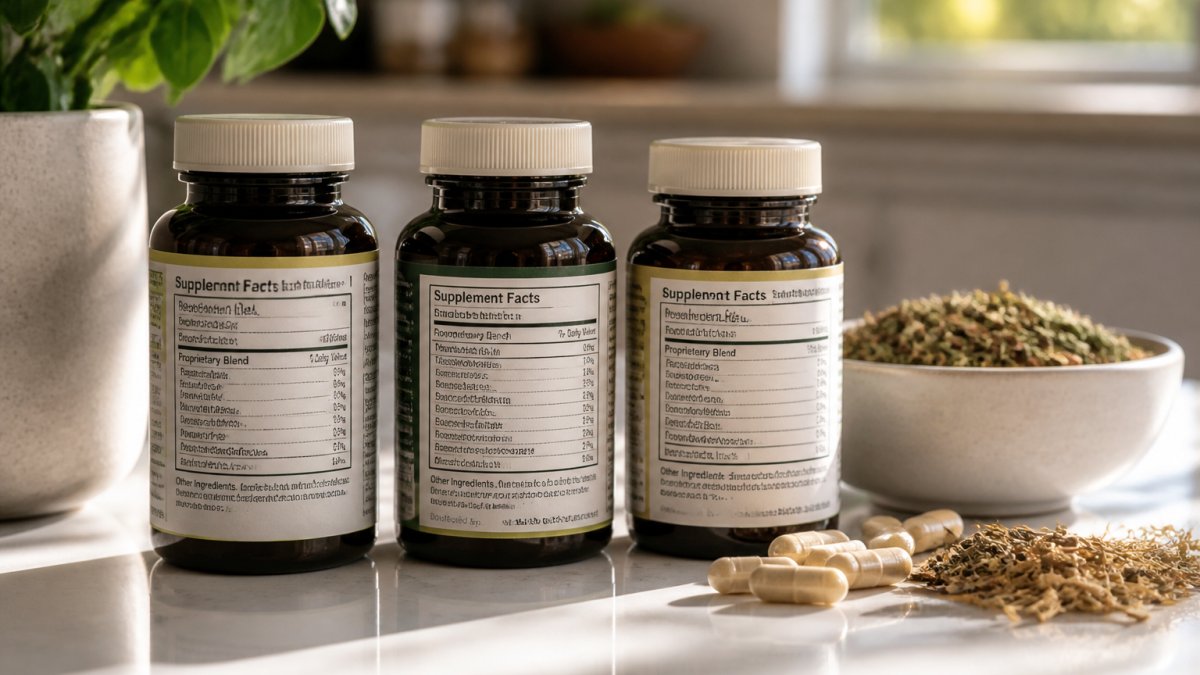
The formulations address specific health challenges: metabolic support targeting weight management and metabolic recovery (relevant for those transitioning off GLP-1 medications), cognitive support for memory, focus, and long-term brain health, and nerve wellness protocols with research-backed botanical combinations.
What distinguishes N&O LLC is transparency: every label discloses exact doses and extract types, with no proprietary blends. The formulations are phased, foundational support first, then targeted protocols, reflecting clinical thinking.
The brand works directly with consumers rather than exclusively through practitioner channels, because clinical credibility is built into the formulations through transparent labeling and research-based ingredient selection.
Pros:
- DNP-formulated with clinical nursing expertise
- Full ingredient transparency, no proprietary blends
- Phased protocols for systematic health building
- Research-based herbal combinations
Cons:
- Newer brand compared to established competitors
- Direct-to-consumer model means you're responsible for determining if a formula fits your needs
Pure Encapsulations: Hypoallergenic Professional Standards
Cons:
- Higher price point than many alternatives
- Less specialized than brands focusing on specific conditions
Thorne: Science-Driven with NSF and Clinical Partnerships
Cons:
- Premium pricing reflects research investment
- Large product catalog can be overwhelming
Metagenics: Lifestyle Medicine and Nutrigenomics Focus
Cons:
- Primarily available through practitioners, not retail
- Requires practitioner relationship for access
- Premium pricing
Himalaya Wellness: Clinical Research Meets Affordability
Cons:
- Mass-market availability can dilute brand perception
- Smaller product range than some competitors
Organic India: Certified Organic Adaptogens
Cons:
- Smaller product range than major brands
- Adaptogenic approach requires patience, results develop over weeks
Garden of Life: Whole-Food Sourced Formulations
Cons:
- Less standardization than extract-based formulas
- Large product range can be confusing
- Whole-food approach may not suit those needing precise dosing
Safety, Interactions, and When to Consult a Healthcare Provider
Herbal supplements interact with medications. Some botanicals affect how your body metabolizes drugs; others potentiate effects. These interactions are documented and clinically significant.
Ginkgo biloba increases bleeding risk with anticoagulants like warfarin, St.
Before starting any herbal supplement protocol, especially if managing chronic conditions or taking prescription medications, consult your healthcare provider.
This consultation matters more with serious conditions: someone with MS considering nerve support supplements should discuss options with their neurologist, someone transitioning off GLP-1 medications should coordinate metabolic support with their prescribing physician, and someone managing cognitive decline should involve their primary care doctor.
Professional grade brands support this conversation.
FDA guidance on dietary supplement safety provides resources for understanding supplement regulation and safety. Natural Medicines Comprehensive Database offers evidence-based information on herbal supplement interactions and safety.
Professional grade herbal supplement brands represent a different category from retail alternatives, formulated with clinical expertise, tested for quality, and designed for specific health outcomes.
Choosing among professional brands requires understanding what makes each distinct. N&O LLC offers clinical formulations from a DNP with decades of nursing experience.
The right choice depends on your needs. For metabolic health, cognitive decline, or nerve-related conditions, professional grade formulations offer advantages over retail.
Start by identifying your target health outcome, then evaluate brands on ingredient transparency, testing practices, and evidence backing.
Frequently Asked Questions
What makes an herbal supplement professional grade?
Professional grade herbal supplements meet rigorous manufacturing standards and evidence-based formulation criteria. They include transparent labeling of all ingredients and doses, and manufacturing practices that ensure batch-to-batch consistency.
How can you evaluate the quality of an herbal supplement brand?
Look for transparent labeling that lists every ingredient with exact doses.
Are professional-grade herbal supplements better than store-bought supplements?
Professional-grade supplements offer transparent ingredient disclosure compared to standard retail options. However, 'better' depends on your specific health goals and needs. Professional-grade formulations excel for targeted therapeutic support, especially for individuals managing chronic conditions or taking medications.
What should I check on an herbal supplement label?
Examine the ingredient list for specificity: look for exact serving sizes, and the number of servings per container. Verify that the label lists all active and inactive ingredients with no vague terms like 'proprietary blend.'
Should I ask a healthcare professional before taking herbal supplements?
Yes, consulting a healthcare provider before starting herbal supplements is strongly recommended, especially if you take medications, have chronic conditions like multiple sclerosis, or are managing blood sugar and metabolic health. Many herbal supplements can interact with prescription medications or affect medical conditions. A healthcare professional can review your specific situation, verify that a supplement won't interfere with your treatment, and recommend appropriate dosing. This is particularly important when transitioning off medications or using supplements as adjuncts to conventional medical care.
Get started with N&O LLC and discover research-based herbal protocols formulated by a doctoral-prepared nurse with nearly thirty years of clinical experience. Our transparent formulations support metabolic health, cognitive function, and nerve wellness with exact doses and ingredient disclosure. Shop all our clinical-grade supplements and take control of your health journey with formulations you can trust.