 how-to
Can Herbal Supplements Help With Metabolic Sluggishness?
Last Updated: October 30, 2026
Quick Summary
Herbal supplements can offer modest support for metabolic sluggishness, but they do not replace diet, activity, or medical care. Green tea, ginger, turmeric, cayenne, fenugreek, and gymnema have the most human research, with small effect sizes. Get lab work first, because a slow thyroid or insulin resistance needs medical care.
- Metabolic sluggishness is a lay term, not a medical diagnosis, and no blood test measures it.
- Brewed green tea at 2-3 cups daily is the best-studied form; avoid high-dose EGCG capsules.
- Fenugreek and gymnema can lower blood sugar, so talk to your prescriber before combining them with diabetes medication.
- Treat any claim scoring below 3 on the five-point checklist as unproven for your purposes.
- Get a basic panel with fasting glucose, A1C, TSH, and a lipid panel before self-treating.
Table of Contents
- What People Mean by Metabolic Sluggishness
- Herbs That May Support Metabolism: What the Evidence Shows
- Natural Supplements for Insulin Resistance: Fenugreek, Gymnema, and Curry Leaf
- Evidence-Based Metabolism Support: Reading Effect Sizes and Study Quality
- Supplement Safety and Medication Interactions You Need to Check
- How to Choose Quality Herbal Supplements and Dose Them Sensibly
- When to Seek Medical Evaluation Before Self-Treating
- Building a Safe Herbal Protocol With N&O LLC
- Frequently Asked Questions
What People Mean by Metabolic Sluggishness
Metabolic sluggishness is a lay term, not a medical diagnosis.
No blood test measures "sluggishness." Clinicians look at specific markers instead.
Those markers include resting metabolic rate, fasting blood glucose, insulin sensitivity, and thyroid function.
So the first question isn't which herb to take. It's whether something measurable is actually off.
Many people who feel sluggish have normal lab work.
- True metabolic slowdown: confirmed by labs or measured energy expenditure
- Perceived sluggishness: symptoms without a clear lab marker
- Secondary causes: poor sleep, low muscle mass, medication side effects, stress
Herbs That May Support Metabolism: What the Evidence Shows
A short list of herbs has real human research behind it. Most others have only lab or animal data. That gap matters, because a cell-culture result rarely translates into a meaningful effect in people.
The herbs below are the ones with the most consistent human evidence. Effect sizes are modest, and none replaces diet, activity, or medical care.
Green Tea and Thermogenesis
Green tea is the most studied herb for thermogenesis, the process of generating body heat, which burns calories. Its active compounds are catechins, especially EGCG, plus small amounts of caffeine.
The effect is real but modest, and it shrinks in people who regularly consume caffeine.
That last point is the one most guides skip. A cup of tea and a high-dose extract are not the same thing.
- Best form: brewed tea, 2-3 cups daily
- Extract caution: avoid high-dose EGCG capsules, especially on an empty stomach
- Realistic expectation: a small bump in calorie burning, not visible weight loss on its own
Ginger, Turmeric, and Cayenne: Digestion, Inflammation, and Heat
These three are often grouped together, but they work differently. Ginger acts on digestion. Turmeric acts on inflammatory pathways. Cayenne acts on heat and appetite.
If you want the studied doses and medication interactions for curcumin specifically, our guide to turmeric and curcumin covers what the research used and who should avoid it.
Here is how the most-studied metabolic herbs differ in form, caution, and realistic expectation.
| Herb | Best form | Key caution | Realistic expectation |
|---|---|---|---|
| Green tea | Brewed tea, 2-3 cups daily | Avoid high-dose EGCG capsules, especially on empty stomach | Small bump in calorie burning, not visible weight loss alone |
| Ginger | Acts on digestion | Can add to anticoagulant effects | Modest human evidence, not a replacement for diet or activity |
| Turmeric | Acts on inflammatory pathways | Can add to anticoagulant effects | Modest human evidence, not a replacement for diet or activity |
| Cayenne | Acts on heat and appetite | Can affect blood pressure readings | Modest human evidence, not a replacement for diet or activity |
| Fenugreek | Studied in people with elevated glucose | Can lower blood sugar; talk to prescriber | May do little in someone with normal labs |
| Gymnema | Studied in people with elevated glucose | Can lower blood sugar; talk to prescriber | May do little in someone with normal labs |
Natural Supplements for Insulin Resistance: Fenugreek, Gymnema, and Curry Leaf
Watch out: fenugreek and Gymnema can both lower blood sugar. Talk to your prescriber before combining any supplement with diabetes medication.
For a deeper look at the studied doses and drug interactions for berberine, a related metabolic herb, see our berberine research guide. For a plain-language reference on any single herb, our herb and ingredient library lists the research, doses, and interactions for each one.
Evidence-Based Metabolism Support: Reading Effect Sizes and Study Quality
A study can be statistically significant and still show a difference too small to matter. Asking about effect size helps separate meaningful evidence from noise.
Start with the effect size, not the headline
Ask what the trial actually measured and how big the change was. A few benchmarks help you calibrate:
These are rules of thumb, not cutoffs. The point is to compare the reported effect against the size of change that would actually matter to you.
Separate human trials from lab and animal data
A cell-culture or mouse result tells you a mechanism is plausible, not that a person will notice anything. When you read a claim, find the study type:
- Randomized, placebo-controlled human trial, strongest; still check size, duration, and population.
- Open-label or uncontrolled human trial, suggestive but vulnerable to placebo and expectancy.
- Animal study, mechanism only; doses often far above human equivalents.
- Lab or cell study, mechanism only; no dosing guidance.
- Traditional use, historical context, not proof of effect.
A common pattern is a strong lab finding paired with a weak or absent human trial. Treat that as a hypothesis, not a recommendation.
Check who was studied
Results in people with type 2 diabetes do not automatically transfer to healthy adults, and vice versa. Many fenugreek and Gymnema trials enroll people with elevated glucose; the same herb may do little in someone with normal labs. Age, body weight, medication use, and baseline diet all change the result.
Check dose, form, and duration
A trial using a concentrated extract at 500 mg tells you nothing about a 100 mg capsule of raw powder. Match four things before trusting a claim:
- Plant part (leaf vs. root vs. seed)
- Extract ratio or standardization (for example, a standardized curcuminoid percentage)
- Dose per day, not per capsule
- Duration, metabolic changes take weeks, not days
A simple scoring method
Give each claim one point for each of the following, and treat a score below 3 as unproven for your purposes:
- Human randomized trial
- Placebo-controlled
- Effect size large enough to matter
- Population similar to you
If you want a structured method for judging studies yourself, our step-by-step guide to assessing supplement research walks through the same checklist we use when reviewing evidence.
Supplement Safety and Medication Interactions You Need to Check
Supplement safety is not a given because a product is "natural." Herbs contain active compounds that interact with drugs, and the interactions are predictable once you know them.
The highest-risk combinations for metabolic herbs:
- Blood thinners: turmeric and ginger can add to anticoagulant effects
- Diabetes medication: fenugreek and Gymnema can stack with glucose-lowering drugs
- Thyroid medication: some herbs bind or alter absorption, so timing matters
- Blood pressure drugs: cayenne and green tea extract can affect readings
The FDA's dietary supplement information for consumers is clear that supplements are regulated as food, not drugs. That means no pre-market proof of effectiveness.
One more caution: the FDA has warned about products marketed for weight loss that contain undisclosed pharmaceutical ingredients.
How to Choose Quality Herbal Supplements and Dose Them Sensibly
Quality comes down to what you can verify before buying: the label, the testing, and the dose. Most guides stop at "buy a reputable brand." This one gives you the specific checks.
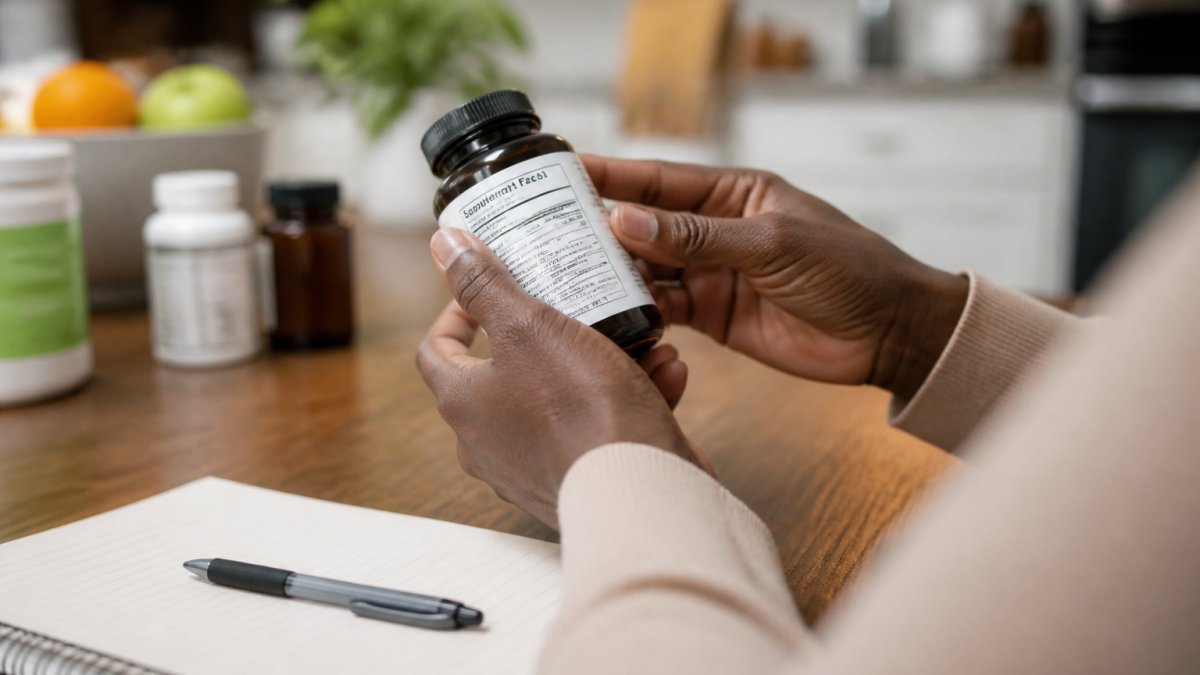
Read the label like a researcher
A credible label tells you four things:
- Exact plant part, leaf, root, seed, or rhizome. Different parts can have different compounds.
- Extract ratio or standardization, for example, "4:1 extract" or "standardized to 95% curcuminoids." Without this, you cannot compare to a trial.
- Amount per serving, not just per capsule. Two capsules may be one serving.
- Other ingredients, fillers, flow agents, and proprietary blends that hide doses.
"Proprietary blend" is the most common red flag. It lets a manufacturer list several herbs without disclosing how much of each is present, which makes dose-matching impossible.
Understand what third-party testing covers
Independent labs check for heavy metals, microbial contamination, pesticide residues, and label accuracy, whether the bottle contains what it claims. A certificate of analysis (CoA) is the documentation.
Contamination and adulteration are real risks in herbal products. The FDA has warned about products marketed for weight loss that contain undisclosed pharmaceutical ingredients, and independent testing has repeatedly found herbal products that did not match their labels.
Match the dose to the research
- Start at the low end of the studied range.
- Give it several weeks before judging results.
- Change one herb at a time so you can tell what helps and what causes a side effect.
A pre-purchase checklist
- Exact plant part and extract ratio listed
- Amount per serving stated, not hidden in a blend
- Third-party testing or certificate of analysis available
- Dose matches published human research
- Interaction warnings on the label
When to Seek Medical Evaluation Before Self-Treating
Some symptoms should send you to a clinician before you buy anything. Unexplained weight gain, persistent fatigue, feeling cold all the time, or tingling in the hands and feet are not supplement problems first.
Get evaluated if you have:
- Weight change without a change in diet or activity
- Fasting glucose in the prediabetes range, or a family history of type 2 diabetes
- A thyroid condition, or symptoms that suggest one
- New nerve symptoms such as burning or numbness
- Any prescription medication with a narrow therapeutic window
A basic panel (fasting glucose, A1C, TSH, and a lipid panel) gives you a baseline. Supplements work best as an addition to that picture, not a substitute for it.
Building a Safe Herbal Protocol With N&O LLC
A sensible protocol starts with one herb at a time, a studied dose, and a clear reason for each addition.
At N&O LLC, our formulas are formulated by Dr. Readers ready to act can review the Metabolic Weight Management Protocol for the AM · Noon · PM herbal protocol with studied doses.
If you're transitioning off a GLP-1 medication, talk with your doctor about the diet and activity plan that fits your situation.
Frequently Asked Questions
Can herbal supplements improve metabolic health?
None of these replace diet, physical activity, or prescribed medication. Review any product with your clinician before starting, especially if you have a diagnosed condition or take daily medication.
What is the best natural supplement for insulin resistance?
There is no single best option, and anyone promising one is overselling. Before adding any supplement, get baseline labs through your clinician so you can measure whether anything actually changes.
How can you tell whether a supplement is safe and evidence-based?
Check three things. First, the label should list every ingredient with a specific dose, not a vague proprietary blend. Second, look for third-party testing or a certificate of analysis you can request. Third, search PubMed for the herb name plus the outcome you care about and read whether the studies were randomized, how many people were enrolled, and how large the effect was. A single small trial is a hint, not proof. Ask your pharmacist about interactions with anything you already take.
When should you talk with a health care professional about metabolic symptoms?
Book an appointment if you have unexplained weight gain or loss, persistent fatigue, increased thirst or urination, tingling in your hands or feet, or blood sugar readings outside your target range. These can signal thyroid disease, prediabetes, or diabetes, and none of them should be self-treated with herbs first. Bring a list of every supplement and medication you take, including doses, so your clinician can screen for interactions and order the right labs.
Metabolic sluggishness rarely has one fix, and no single herb reverses it. What works is a clear baseline, a small number of evidence-backed herbs at real doses, and honest attention to interactions. Get started with N&O LLC and build a phased protocol you can actually track, with full transparency on every ingredient and dose.