 how-to
Nerve Pain Relief Through Anti-Inflammatory Diet
Table of Contents
- How Inflammation Drives Nerve Pain
- Anti-Inflammatory Foods for Nerve Pain
- Foods to Avoid for Nerve Pain
- Building an Anti-Inflammatory Diet Meal Plan
- How Long Does an Anti-Inflammatory Diet Take to Work
- Nutrient Deficiencies and Neuropathy: What You Need to Know
- Tracking Progress and When to Consult a Healthcare Provider
- Frequently Asked Questions
Last Updated: October 12, 2026
How Inflammation Drives Nerve Pain
Inflammation is your body's natural response to injury or stress, but when chronic, it can trigger or worsen nerve pain.
Nerve pain, or neuropathic pain, feels different, burning, tingling, or sharp. Unlike acute pain that signals injury, it persists because the nervous system becomes sensitized. Research suggests reducing systemic inflammation can calm overactive nerve signals and provide relief.
Nerve pain relief through anti-inflammatory diet addresses the root cause rather than masking symptoms.
Anti-Inflammatory Foods for Nerve Pain
Nerve pain relief through anti-inflammatory diet rests on specific food categories proven to reduce systemic inflammation by suppressing inflammatory pathways.
Fatty Fish and Omega-3 Fatty Acids
Fatty fish are among the most powerful anti-inflammatory foods.
Omega-3s support the myelin sheath, the protective coating around nerve fibers. When it degrades, nerve pain worsens; regular fatty fish helps maintain and repair it.
Aim for fatty fish 2-3 times per week, 3-4 ounces per serving. If you don't eat fish, try flaxseeds, chia seeds, or walnuts, though they contain a form of omega-3 your body must convert.
Berries, Colorful Vegetables, and Whole Grains
Berries, especially blueberries, blackberries, raspberries, and tart cherries, contain anthocyanins and polyphenols that neutralize inflammatory compounds and protect nerve cells from oxidative stress that amplifies pain signals.
Colorful vegetables (deep greens, reds, oranges, purples) offer similar benefits.
Whole grains, oats, brown rice, quinoa, whole wheat, provide fiber and resistant starch. Fiber feeds gut bacteria that produce short-chain fatty acids reducing inflammation throughout the body.
Include:
- 1-2 cups of colorful vegetables daily
- A handful of berries as a snack or breakfast addition
- At least one whole grain serving per meal
Foods to Avoid for Nerve Pain
Certain foods actively promote inflammation and should be minimized when managing nerve pain.
Processed foods and added sugars trigger inflammatory responses.
Alcohol and caffeine in excess can irritate the nervous system and interfere with sleep, which is critical for nerve repair.
Focus on reduction rather than perfection. Cutting processed foods by 80% will show results faster than waiting for 100% compliance.
Building an Anti-Inflammatory Diet Meal Plan
Most anti-inflammatory articles hand you a sample day and stop, leaving you unable to improvise on a Tuesday night with nerve pain and no plan. What follows is a framework, not a script: a plate formula, a shopping list, and a sample week.
The Plate Formula for Nerve Pain
Build every lunch and dinner around four components, one rule that replaces meal-by-meal decision fatigue.
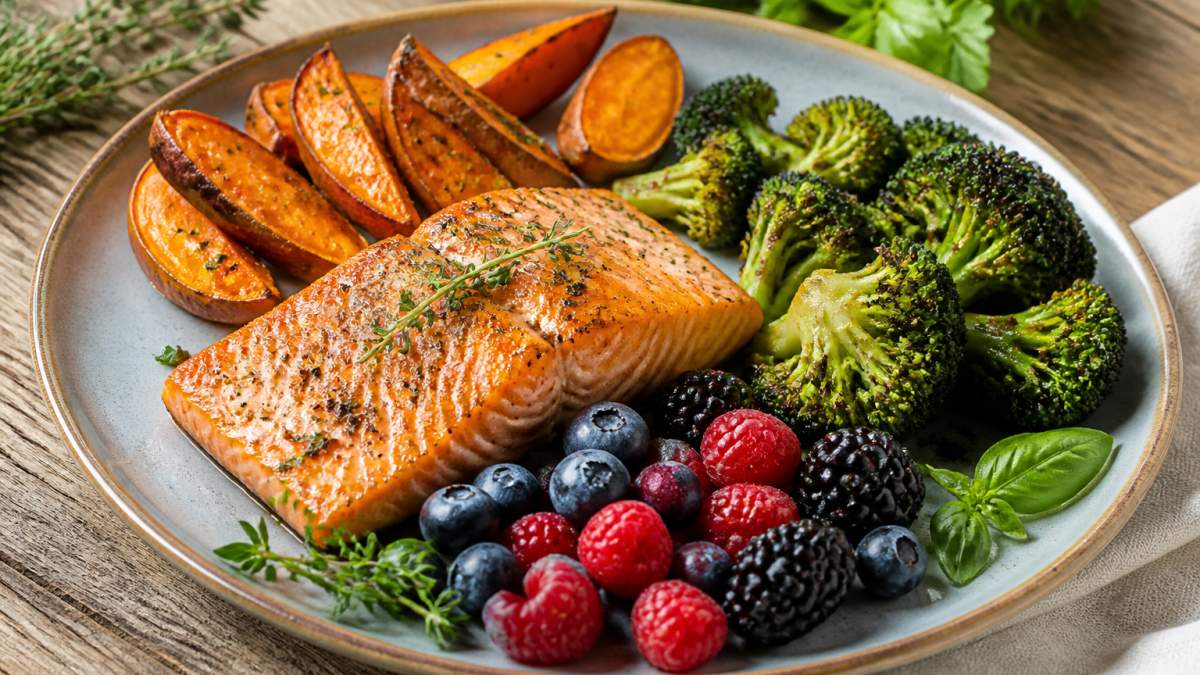
- One palm-sized protein, fatty fish (salmon, sardines, mackerel, anchovies), skinless poultry, eggs, tofu, tempeh, or legumes. Aim for fatty fish 2-3 times per week; a serving is 3-4 ounces cooked.
- Half the plate in colorful vegetables, target 1-2 cups cooked or 2-3 cups raw. Rotate colors across the week: dark greens, reds, oranges, purples.
- One cupped-hand portion of whole grains or starchy vegetables, oats, brown rice, quinoa, farro, sweet potato, or beans.
Breakfast follows a simpler rule: protein + fiber + color. Oats with berries and flaxseed, Greek yogurt with blueberries and walnuts, or eggs with whole-grain toast, avocado, and spinach all fit.
A Sample Week You Can Actually Cook
This is a template, not a prescription. Swap proteins and vegetables freely using the plate formula.
| Day | Breakfast | Lunch | Dinner |
|---|---|---|---|
| Mon | Steel-cut oats, blueberries, ground flaxseed | Salmon salad over greens with olive oil and lemon | Roasted chicken thighs, broccoli, sweet potato |
| Tue | Greek yogurt, raspberries, walnuts | Lentil soup with kale and carrots | Baked cod, roasted bell peppers, quinoa |
| Wed | Veggie omelet, whole-grain toast, avocado | Leftover cod over mixed greens | Turkey chili with beans, tomatoes, spinach |
| Thu | Overnight oats with chia and tart cherries | Sardines on whole-grain crackers, cucumber salad | Grilled salmon, asparagus, brown rice |
| Fri | Smoothie: spinach, blueberries, flaxseed, kefir | Chicken and quinoa bowl with roasted vegetables | Tempeh stir-fry with broccoli, peppers, ginger |
| Sat | Eggs, sautéed spinach, sweet potato hash | Tuna and white bean salad with olive oil | Roasted mackerel, Brussels sprouts, farro |
| Sun | Oatmeal with apple, cinnamon, walnuts | Leftovers or a big chopped salad with chickpeas | Sheet-pan salmon, carrots, red onion, sweet potato |
Snacks: a handful of nuts, berries, carrot or celery sticks with hummus, or a hard-boiled egg. Beverages: water, unsweetened tea, or coffee in moderation.
Shopping List by Aisle
- Produce: spinach, kale, broccoli, bell peppers, carrots, sweet potatoes, Brussels sprouts, asparagus, tomatoes, cucumbers, red onion, garlic, lemons, blueberries, raspberries, tart cherries, apples, avocado
- Protein: salmon, sardines, mackerel, cod, tuna, chicken thighs, turkey, eggs, tofu, tempeh, lentils, chickpeas, white beans, black beans
- Grains and pantry: steel-cut oats, brown rice, quinoa, farro, whole-grain bread or crackers, extra-virgin olive oil, walnuts, almonds, ground flaxseed, chia seeds, cinnamon, ginger, turmeric
A Note on Prep and Budget
Batch-cook two proteins and two grains on Sunday, and roast a sheet pan of vegetables, building blocks for four to five meals without cooking nightly. Frozen fish, frozen berries, and canned sardines or salmon are nutritionally comparable to fresh and usually cheaper.
How Long Does an Anti-Inflammatory Diet Take to Work
The honest answer: it depends on what's causing your nerve pain, and no one can promise a timeline. What we can do is separate what's well established from what's preliminary, give realistic ranges, and show you how to measure your response.
What the Evidence Actually Shows
Diet and nerve pain is an active but developing area. A few things are reasonably well established:
- Nutrient deficiencies cause neuropathy. B12, B6, folate, vitamin D, copper, and thyroid-related deficiencies are recognized, treatable causes of peripheral neuropathy. Correcting them can improve symptoms, sometimes substantially.
- Blood sugar control matters. For people with diabetes or prediabetes, sustained glucose control is one of the most evidence-supported ways to slow diabetic peripheral neuropathy. Diet is central to that.
- Weight and metabolic health influence pain. Excess weight increases mechanical load and inflammatory signaling. Weight loss is associated with reduced pain in several chronic pain conditions, though nerve-pain-specific data is thinner.
What is not well established: that any specific food, spice, or supplement reverses existing nerve damage. Most claims rest on small studies, animal models, or mechanistic reasoning rather than large randomized trials in people with neuropathic pain. Treat strong promises with skepticism.
Realistic Timelines
- 1-2 weeks: Most people notice changes in digestion, energy, sleep, or bloating, not nerve pain. These are real but not the target.
- 4-8 weeks: If diet is going to help, this is when many people first notice a shift in burning, tingling, or pain intensity. Improvements are usually partial, not dramatic.
- 3-6 months: More meaningful change, if it comes, tends to accumulate here. Nerve tissue heals slowly, and systemic inflammation responds gradually.
A common pattern: people who also address sleep, blood sugar, and activity alongside diet improve more than those who change food alone.
Effect Size: What "Improvement" Usually Looks Like
Do not expect nerve pain to disappear. A realistic goal is a meaningful reduction in symptom intensity or frequency, enough that sleep, mood, or daily function improves. On a 0-10 scale, a sustained 1-2 point drop is clinically meaningful. Going from 7 to 5 while sleeping better is a win, even if you are not pain-free.
How to Track Your Own Response
Without tracking, you'll attribute every good day to diet and every bad day to a slip, neither reliable. Keep a simple daily log for at least 8 weeks.
What to record each day:
- Pain intensity (0-10) at a consistent time
- Symptom type and location (burning, tingling, numbness, shooting)
- Sleep quality (1-5) and hours slept
How to review it:
- Look at weekly averages, not daily numbers. Nerve pain fluctuates for reasons that have nothing to do with food.
- Compare week 1 to week 8. That is where signal emerges from noise.
- Flag any week where pain, sleep, and function all moved in the same direction. Those are the weeks worth learning from.
When Diet Alone Is Not Enough
If you've tracked carefully for 8-12 weeks, addressed sleep and blood sugar, and seen no meaningful change, diet may not be the main driver. That's useful information, not failure. Nerve pain has many causes, compression, diabetes, autoimmune conditions, medication side effects, genetic factors, and some require medical treatment, physical therapy, or medication. A dietitian and a clinician who treats neuropathy can help you interpret your log and decide next steps.
Nutrient Deficiencies and Neuropathy: What You Need to Know
Certain nutrient deficiencies directly cause or worsen nerve pain.
B vitamins, especially B12, B6, and folate, are critical for nerve function.
Vitamin D supports nerve repair and immune regulation.
Magnesium helps regulate nerve signals and reduce muscle tension.
Iron carries oxygen to nerve cells. Deficiency impairs their ability to repair themselves.
Work with a healthcare provider to test for deficiencies before starting any supplement regimen.
Tracking Progress and When to Consult a Healthcare Provider
Monitoring your response helps you stay motivated and identify what works.
After 4 weeks, review the log for patterns: Did pain decrease on days you ate more fatty fish?
Track beyond pain:
- Sleep quality
- Energy levels
- Mood
These improvements often precede significant pain reduction and signal that your nervous system is responding.
Consult a healthcare provider if:
- Pain worsens despite dietary adherence
- You develop new symptoms
- You're taking medications and considering supplements
An anti-inflammatory diet supports nerve health, but it's not a replacement for medical evaluation.
At N&O LLC, we recognize that managing nerve pain requires both dietary support and targeted supplementation.
Frequently Asked Questions
Can an anti-inflammatory diet help relieve nerve pain?
Yes. Nerve pain, or neuropathic pain, often stems from inflammatory pathways that irritate nerve fibers. An anti-inflammatory diet reduces this inflammation by limiting processed foods and added sugar while emphasizing fatty fish, berries, and whole grains. These foods contain compounds that calm the nervous system and may reduce pain signals over time. Results vary by individual and depend on consistency, but many people report improvement within 4-8 weeks of sustained dietary changes.
What foods may help reduce inflammation linked to nerve pain?
Fatty fish like salmon, sardines, and mackerel provide omega-3 fatty acids that reduce inflammatory pathways. Berries, especially blueberries and blackberries, contain antioxidants that protect nerve tissue. Colorful vegetables, tart cherries, and whole grains rich in fiber support gut flora and overall anti-inflammatory responses. Healthy fats from olive oil and nuts also play a role. Combining these foods consistently provides better results than eating them sporadically.
Can vitamin deficiencies cause or worsen nerve pain?
Yes. Deficiencies in B vitamins (especially B12 and B6), vitamin D, and magnesium are linked to neuropathic pain and nerve damage. An anti-inflammatory diet rich in whole grains, leafy greens, and fortified foods provides many of these nutrients, but some people need supplementation. If you suspect a deficiency, a healthcare provider can test your levels and recommend targeted support. This is especially important if you're managing chronic nerve pain or multiple sclerosis.
How long does it take for an anti-inflammatory diet to affect nerve pain?
Most people notice subtle improvements in 2-4 weeks, with more significant relief appearing after 6-12 weeks of consistent dietary changes. However, timelines depend on pain severity, how long you've had symptoms, and how strictly you follow the plan. Some experience faster results; others need 3-6 months. Tracking your pain symptoms weekly helps you identify which foods reduce or worsen your discomfort, allowing you to refine your approach and stay motivated.
Managing nerve pain through an anti-inflammatory diet is achievable, but it requires patience and consistency. Start by adding anti-inflammatory foods before focusing on elimination. Track your progress honestly. And recognize when professional support, whether medical, nutritional, or supplemental, becomes necessary. The goal isn't perfection; it's meaningful, sustainable improvement in how you feel.