 comparison
Natural Brain Health Supplement Quality Review
Last Updated: October 23, 2026
Quick Summary
A quality brain health supplement review should check three things: disclosed doses on the label, independent third-party testing with a lot-matched certificate of analysis, and a realistic timeline of 8 to 12 weeks. Most products fail at least one check, often hiding doses behind proprietary blends.
- DHA is the most consistently studied nutrient class, but check the actual milligram count, not total fish oil.
- Ashwagandha showed better memory and focus than placebo over three months in a cited study.
- A certificate of analysis without a lot number, lab name, or method details is not real verification.
- Ask whether a brand tests finished products or only incoming raw materials.
- Sleep, resistance training, blood sugar control, and social engagement influence cognition more reliably than any capsule.
Table of Contents
- Why a Brain Health Supplement Quality Review Matters
- Brain Supplement Ingredients and Benefits: What the Evidence Shows
- Herbal Supplements vs Daily Multivitamins: Which Fits Brain Health
- How to Evaluate Supplement Quality: Dose, Label, and Formula
- Third-Party Tested Supplements: Verifying Purity and Potency
- Safety, Interactions, and Realistic Expectations
- Conclusion
- Frequently Asked Questions
Why a Brain Health Supplement Quality Review Matters
A natural brain health supplement quality review matters because the label on the bottle tells you almost nothing about what is inside it.
Walk into any pharmacy and you will find shelves of brain health supplement products promising sharper memory and clearer focus.
Harvard Health Publishing has been blunt about this, noting that research has not established solid proof that brain health supplements work as marketed.
Below, we break down what the evidence actually supports, how to read a label like a clinician, and how to separate serious formulations from decorative ones.
Brain Supplement Ingredients and Benefits: What the Evidence Shows
The strongest evidence in this category belongs to a small number of ingredients, not the long lists you see on most bottles. Brain supplement ingredients and benefits vary enormously in quality of proof, and treating them as interchangeable is the first mistake buyers make.
A practical way to grade the evidence is to sort every claim into three buckets: human clinical trials with cognitive endpoints, human trials with only biomarker endpoints, and animal or mechanistic research. Only the first bucket supports a memory or focus claim. The second supports a nutrient-status claim. The third is a hypothesis, not a benefit.
Omega-3 Fatty Acids and DHA
The evidence is strongest for people with low baseline intake. Trials in populations that already eat fatty fish regularly tend to show smaller effects, which is a useful signal: omega-3s look more like a gap-filler than a cognitive enhancer for well-nourished adults.
The practical issue is dose. Many products include DHA at token amounts that look good on a supplement facts panel but fall well short of what studies use. When you compare products, check the actual milligram count of DHA, not the total "fish oil blend" figure.
Herbal Extracts: Ashwagandha and Beyond
Ashwagandha has the most interesting clinical signal among herbal extracts. GoodRx's review of brain health supplements describes a study in which participants taking ashwagandha daily for three months showed better memory and focus than a placebo group.
The quality variable with ashwagandha is standardization. Root extracts standardized to withanolides are the form used in most trials, and unstandardized root powder varies batch to batch.
Other herbal extracts appear in formulas for mood support and healthy aging, but the evidence base thins out quickly.
Vitamins, Minerals, and B-Vitamins
B-vitamins, particularly B12 and folate, matter most when someone is deficient. In well-nourished adults, trials generally do not show cognitive improvement from extra B-vitamins. That makes them a baseline-coverage ingredient, not a cognitive enhancer. The same logic applies to vitamin D and magnesium: correcting a shortfall is valuable, but adding more on top of sufficiency has weak support for memory or focus.
Evidence Grading by Outcome
Separate the outcomes before you compare products. Memory and recall, attention and focus, and general long-term brain health are different endpoints, and an ingredient studied for one does not automatically transfer to another. DHA has the broadest support for general brain health. Ashwagandha has the clearest signal for stress-related focus and memory over months. Caffeine, often paired with L-theanine, has short-term attention effects measured in hours, not a long-term brain health effect. Blending those categories into one "brain support" claim is where most labels lose credibility.
Herbal Supplements vs Daily Multivitamins: Which Fits Brain Health
Herbal supplements and daily multivitamins serve different jobs, and the herbal supplements vs daily multivitamins comparison is not really a contest.
Multivitamins are broad and forgiving. If one nutrient runs slightly low, the formula still functions. Herbal extracts are not forgiving in the same way.
This is where the "just take a multivitamin" advice breaks down. If your diet already covers essential nutrients, a multivitamin adds little for cognitive function.
We recommend a simple rule: use a multivitamin for baseline coverage and reserve herbal formulas for targeted goals like focus support, mood support, or healthy aging.
How to Evaluate Supplement Quality: Dose, Label, and Formula
Learning how to evaluate supplement quality comes down to three checks: dose adequacy, label transparency, and formula logic. Most products fail at least one.
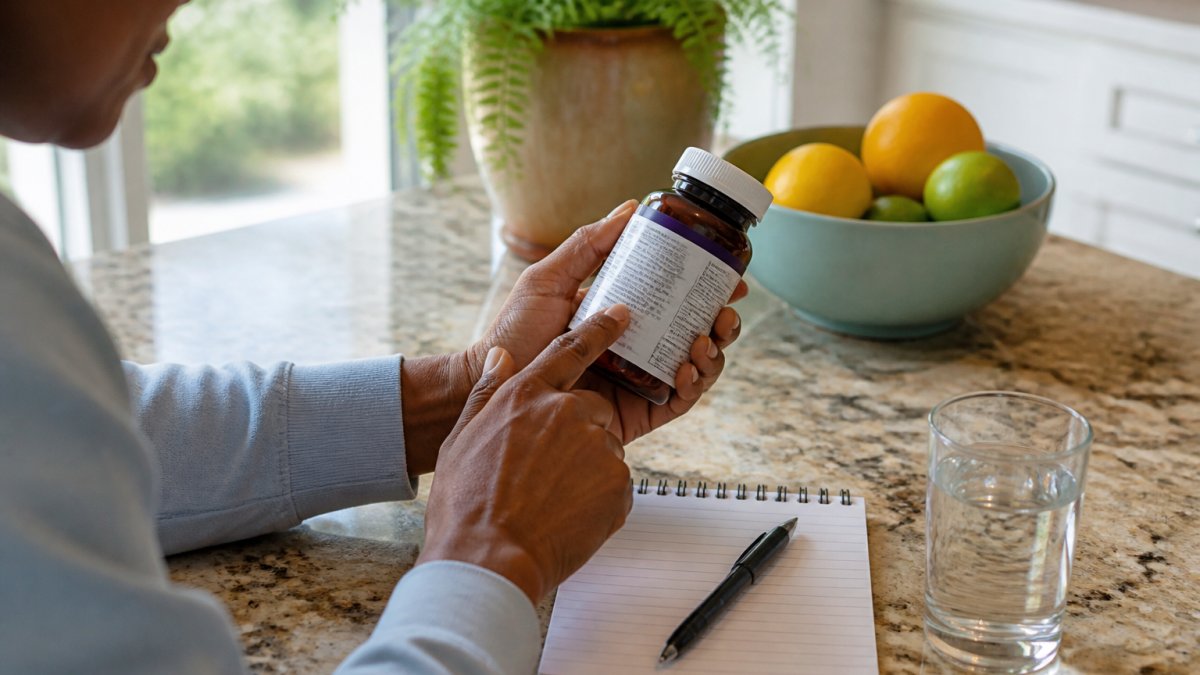
Start with the supplement facts panel. Every active ingredient should show a specific milligram amount.
Next, check for standardization. A quality extract states the marker compound, such as a percentage of withanolides in ashwagandha. Unstandardized powders vary batch to batch, which means your results vary too.
Finally, read the "other ingredients" line. Fillers, flow agents, and artificial colors tell you how the manufacturer thinks about the product. Fewer excipients is generally better.
Dose Adequacy and Proprietary Blends
Dose adequacy is the single most predictive quality signal available to a consumer. A formula with the right ingredients at the wrong doses is functionally the same as a formula with no active ingredients at all.
Proprietary blends exist for one commercial reason: they let a brand list impressive ingredients without revealing that each appears at a fraction of a studied dose. When you see a blend, assume the smallest ingredient in it sets the ceiling for all of them.
Third-Party Tested Supplements: Verifying Purity and Potency
Third-party tested supplements carry verification from a lab that has no financial stake in the result. That independence is the whole point. In-house testing tells you what a manufacturer wants you to know.
Purity testing screens for heavy metals such as lead, arsenic, cadmium, and mercury, plus microbial contamination and residual solvents. Potency testing confirms the label amount is actually in the capsule. Identity testing confirms the raw material is the species and plant part claimed, which matters most for botanical extracts where adulteration and substitution are common.
What a Certificate of Analysis Should Show
A certificate of analysis, or COA, is the lab document that records test results for a specific batch. A useful COA includes the product name and lot number, the testing laboratory's name, the date of testing, the specific methods used, the measured result against the specification, and a pass or fail determination.
Ask for the COA for the current lot, not a generic sample. A brand that shares a COA from two years ago is showing you a marketing document, not a batch record.
Finished-Product vs. Raw-Material Testing
There is a meaningful difference between testing incoming raw materials and testing the finished product. Raw-material testing catches problems before manufacturing. Finished-product testing catches problems that arise during manufacturing, including dose loss, contamination introduced on the line, and label mix-ups. The strongest quality programs do both. If a brand only tests raw materials, ask why the finished product is not verified.
How to Verify the Lab
Independence is only as good as the lab behind it. Look for a lab that is accredited to a recognized standard, such as ISO/IEC 17025, which covers the competence of testing and calibration laboratories. Accreditation is not a guarantee of a good product, but it is a check that the lab itself is held to a documented quality system.
Ask a brand four questions before you buy:
- Which independent lab performs your testing, and is it accredited?
- Can you share the certificate of analysis for the current lot number?
- Do you test finished products or only incoming raw materials?
- Which contaminants do you screen for, and at what limits?
A brand that cannot answer these questions is not necessarily dishonest. It may simply not test. Either way, you now know where you stand.
We built N&O LLC around full transparency of ingredients and doses on every label, because a customer who cannot read the dose cannot evaluate the product.
Safety, Interactions, and Realistic Expectations
Safety deserves more attention than it usually gets. Herbal extracts are not inert, and some interact with prescription medications through pathways like methylation and liver enzyme activity.
Population-specific caution matters too. Pregnancy, breastfeeding, upcoming surgery, and existing liver conditions all change the risk calculation.
On expectations: the honest answer is that time to benefit is measured in weeks, not days. The ashwagandha trial referenced earlier ran for three months.
Non-supplement factors still do most of the work. Sleep, resistance training, blood sugar control, and social engagement all influence cognitive function more reliably than any capsule.
Conclusion
The hardest part of buying in this category is that the products look identical on the shelf while differing enormously underneath. Labels hide doses, blends obscure formulas, and testing is often optional.
At N&O LLC, Dr. Paulette Y. Jones, DNP-L, RN, built our protocols around nearly thirty years of clinical nursing experience, research-based herbal formulations, and full dose transparency on every label.
If you want to know exactly what you are putting into your body, start there. Shop All and read the labels for yourself.
Frequently Asked Questions
How can you tell whether a brain health supplement is high quality?
Start with the label. A high-quality brain health supplement lists every ingredient and its exact dose, without hiding amounts inside a proprietary blend. Look for third-party testing marks from independent labs, which verify purity and potency. Check whether the formula includes ingredients with clinical evidence at the doses used in studies, such as omega-3 fatty acids with DHA. Finally, confirm the manufacturer discloses allergen and contaminant testing. If a brand will not share testing documentation when asked, treat that as a warning sign.
Are herbal supplements better than daily multivitamins for brain health?
They serve different purposes. A daily multivitamin covers baseline essential nutrients like vitamins and minerals, which support normal brain function if your diet falls short. Herbal supplements target specific outcomes, such as focus or recall, using extracts like ashwagandha. Neither replaces a healthy diet. If you already eat well, a multivitamin may add little; an herbal formula may be worth considering if you want support for a specific goal. Review the evidence for each ingredient rather than assuming one category is superior.
What should you look for on a brain supplement label?
Look for full ingredient transparency: every compound named, with the dose in milligrams per serving. Check the serving size so you know how many capsules a day the dose requires. Scan for certifications or statements about third-party tested supplements, plus allergen notes like gluten-free or vegan capsules if those matter to you. Watch for stimulant-free and caffeine-free claims if you are sensitive. Avoid products that list ingredients only inside a proprietary blend, since you cannot judge whether the dose is adequate.
Can brain health supplements interact with medications?
Yes. Herbal extracts can interact with prescription drugs, including blood thinners, blood sugar medications, and immunosuppressants. This matters if you manage a chronic condition or take daily medication. Before starting any brain health supplement, show the full label to your pharmacist or physician and ask about interactions specific to your prescriptions. Population-specific safety also varies: older adults, pregnant people, and those with autoimmune conditions should be especially cautious. No supplement review replaces personalized medical advice.
Quick Reference: Quality Evaluation Checklist
| Check | What Good Looks Like | Red Flag |
|---|---|---|
| Dose disclosure | Specific mg per ingredient | "Proprietary blend" with no breakdown |
| Standardization | Named marker compound percentage | Unstandardized raw powder |
| Testing | Independent lab, COA available | No testing information |
| Excipients | Short, recognizable list | Long filler and color list |
| Timeline | 8-12 weeks to assess | Same-week promises |